
Momentum Issue #173
The ITS Questions on Everyone’s Mind and Why They Matter
If you’ve noticed an uptick in questions from transportation colleagues and external partners about “what’s next” for ITS, you’re not imagining it.
Across the transportation ecosystem, interest is shifting from curiosity to capability. Professionals aren’t just searching for what ITS is—they’re looking for what works, what scales, what’s secure, and what’s ready to deploy.
Recent industry and research signals point to a clear theme: ITS is on the path from individual projects to nation-wide interoperable connectivity with emerging technologies driving demand for measurable outcomes.
Below is the list of ITS topics that professionals are searching for the most today. We’ll delve into what they mean for ITS America members and how we can collaboratively drive innovation as we convene peers, accelerate deployment, and shape the policy environment of the future.
1) AI-Powered Traffic Management: From Pilots to Proven Impact
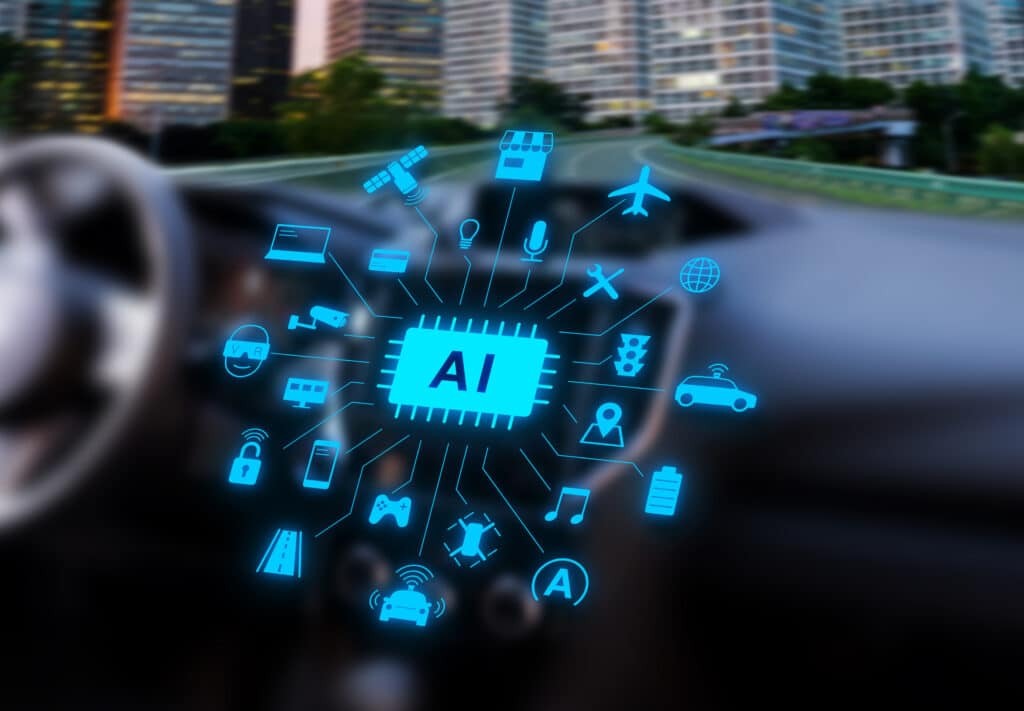
Industry curiosity is increasingly oriented around applied AI: signal optimization, predictive traffic management, and incident detection and response. The “why” is straightforward—agencies and operators need systems that adapt to real-world variability in real time, not static plans built for ideal conditions. Trend reporting underscores that AI in ITS has moved beyond experimentation into operational use cases with observable benefits, enabled by improvements in connectivity and scalable compute.
What it means for members: This is a moment to elevate practical playbooks: procurement language, performance measurement, and change management. When AI is being searched as an operational tool—not a concept—our community’s role in sharing case studies, deployment lessons, and governance models becomes even more valuable.
2) Connected Vehicles & V2X: Safety and Interoperability at the Center
Interest in V2X continues to grow, especially where it intersects with safety-critical applications and new network capabilities. Research attention is focused on accident-aware traffic management and route optimization using V2X data, which is an indicator that stakeholders are searching for solutions that improve response time, reduce secondary incidents, and enhance overall network efficiency. At the same time, the conversation is expanding into next-generation connectivity and how AI can optimize V2X communications, resource allocation, and security.
What it means for members: Connectivity is no longer a “nice to have”; it is a foundational element of our infrastructure. That elevates the importance of conversations about interoperability, standards alignment, and the institutional readiness needed to integrate vehicles, roadside systems, and cloud/edge environments.
3) Smart Cities & Integrated Platforms: Digital Infrastructure is Essential Infrastructure
More searches are now treating transportation as part of a broader “smart city” ecosystem. Traffic operations, transit priority, curb management, emergency response, and resiliency goals are connected through shared data and platforms. Industry reporting highlights increasing cloud adoption and a shift toward broader access to mobility data, which naturally drives interest in integrated solutions rather than siloed deployments.
What it means for members: The opportunity (and challenge) is integration—connecting stakeholders and systems across agencies and modes. That aligns directly with the ITS America community’s convening power: when the market is searching for “how to integrate,” it’s looking for cross-sector coordination, repeatable architectures, and governance frameworks.
4) Autonomous Systems, Viewed Through a Deployment Lens

Public search interest still includes learning more about “self-driving cars” as well as safety concerns, while professional interest is increasingly practical and focused on safety: “What infrastructure, data exchange, and operational policies do we need to support higher levels of automation safely?” Mobility trend analyses emphasize the convergence of connected ecosystems, AI, and real-time decision-making as autonomy matures beyond isolated pilots.
What it means for members: As searches evolve from “when will it happen?” to “how do we operate it safely?”, the member community can lead with guidance on readiness: ODD considerations for mixed automation levels , work zone operations, and public agency operating models.
5) Cybersecurity: Trust Is Now a Core Deployment Requirement
As systems become more connected and cloud-enabled, searches increasingly reflect an urgency around cyber risk, resilience, and protection of critical mobility systems. Trend reporting flags rising cybersecurity requirements and the need for continuous device management and compliance as connectivity and cloud adoption expand.
What it means for members: Cybersecurity is no longer a separate workstream. It is embedded in procurement, architecture, operations, and workforce capability. In practice, “secure-by-design” is becoming a market expectation, not an aspirational goal.
6) Data, Cloud, Edge: The Operating System of Modern ITS
A major driver beneath many industry searches is the “how” of ITS: cloud-based traffic management, edge computing for low-latency decisions, and real-time analytics for network performance. Industry signals point to increased cloud adoption and demand for flexible, scalable computing, while emerging narratives around edge AI emphasize local processing to reduce latency for safety-critical use cases.
What it means for members: This raises the value of shared implementation patterns—reference architectures, data governance, and outcome-based KPIs—so agencies and solution providers can reduce friction in deployments and focus resources on impact. When in doubt, collaborate!
7) Funding & Modernization: The “How Do We Pay for This?” Questions
Finally, industry interest continues to orbit the practicalities of modernization: how to finance new infrastructure and keep pace with evolving needs. Transportation trend analysis increasingly spotlights modernization pressures (aging infrastructure, weather impacts, cyber vulnerabilities) and the need for strategic investment approaches alongside technology adoption.
What it means for members: When the field is searching for funding and modernization pathways, it signals an opening for coordinated advocacy, clear ROI narratives, and examples that connect technology investments to safety, reliability, and economic competitiveness.
Why This Matters for ITS America Members

Put simply: today’s searches show ITS is being treated as essential infrastructure—digital, connected, and outcomes-driven.
For ITS America members, that creates a strategic advantage: we can meet the moment by sharing deployments that work, surfacing the standards and governance that make systems interoperable and secure, and aligning stakeholders across public and private sectors to move from interest to implementation.
Are you ready to transform the future of transportation? Get involved today.
Join a Committee: https://itsa.org/about/standing-committees/
Host a webinar: https://itsa.org/webinars/
Attend, exhibit, or demonstrate at an event: https://itsa.org/events/
Submit a use case to the ITS Technology Use Case Library: https://itsa.org/technology-use-case-library/
Speak on a podcast: https://itsa.org/the-transportation-channel-podcasts/
Advertise your solution in a newsletter: https://itsa.org/its-america-smartbrief/
Sources: Yunex Traffic, Deloitte, Cornell, Gartner, Scientific Reports, embedUR, BIS Research, StartUs Insights
